Texture on the Runway, Texture on the Wall: A Collector's Guide to the Shared Visual Language of High Fashion and Contemporary Textural Fine Art
Walk into the atelier of a Parisian couture house at dawn, when the light cuts across bolts of silk charmeuse and hand-pleated wool. The air carries the scent of steam and possibility. A master tailor unfurls a length of Chanel tweed, and your fingers instinctively reach out to touch it. The nubby surface, the interplay of threads, the way light dances across the weave. You are experiencing something that transcends mere fabric. You are experiencing texture as a language of luxury, intention, and artistic mastery. That same sensibility, that same hunger for tactile richness and visual depth, is precisely what defines the most coveted contemporary fine art today.
The connection between haute couture and textural fine art is neither accidental nor superficial. Both disciplines speak to collectors who understand that true luxury lives not in flatness, but in dimension. Not in uniformity, but in the complex interplay of light and shadow across a worked surface. In the past decade, as contemporary art markets have matured and collectors have become increasingly sophisticated, a profound visual convergence has occurred. The textural vocabulary of high fashion and the dimensional language of impasto-based fine art have become virtually indistinguishable to the trained eye. Understanding this connection is essential for any serious collector.
The Tactile Revolution in Contemporary Art
For much of the twentieth century, fine art and fashion occupied separate visual territories. Modernism, with its emphasis on flatness and the picture plane, created a philosophical gulf between the two disciplines. Painting was meant to be seen, not touched. Fashion, by contrast, was inherently tactile, sensual, worn against the skin. But somewhere in the 1980s and 1990s, as postmodern thinking began to dissolve rigid categorical boundaries, collectors and curators started to recognize something crucial: the most emotionally resonant contemporary art was increasingly three-dimensional, textured, and unapologetically sensual.
Artists began to reject the tyranny of the flat canvas. Anselm Kiefer built up surfaces with lead, straw, and photographs. Cy Twombly's gestural abstraction created physical depth that demanded to be seen in person. Anish Kapoor played with material and surface in ways that made viewers acutely aware of their own tactile desire. These weren't aberrations or regressions. They were the future of fine art collecting. And they spoke directly to the same sensibilities that had always animated high fashion.
What haute couture had always understood, contemporary art was finally embracing: texture is not decoration. Texture is content. Texture is meaning. A Valentino haute couture gown constructed with seventeen layers of hand-pleated silk organza isn't luxurious because it's expensive; it's expensive because it's luxurious. The labor, the intention, the mastery embedded in that surface is palpable. Contemporary textural art operates on precisely the same principle. When Gabrielle Benot builds up layers of pigment and medium in her signature "Guscio" technique, creating surfaces that catch and hold light in unexpected ways, she is speaking the exact language that a couturier speaks when constructing a jacket from forty-two separate pattern pieces.
Why Collectors Recognize Luxury in Texture
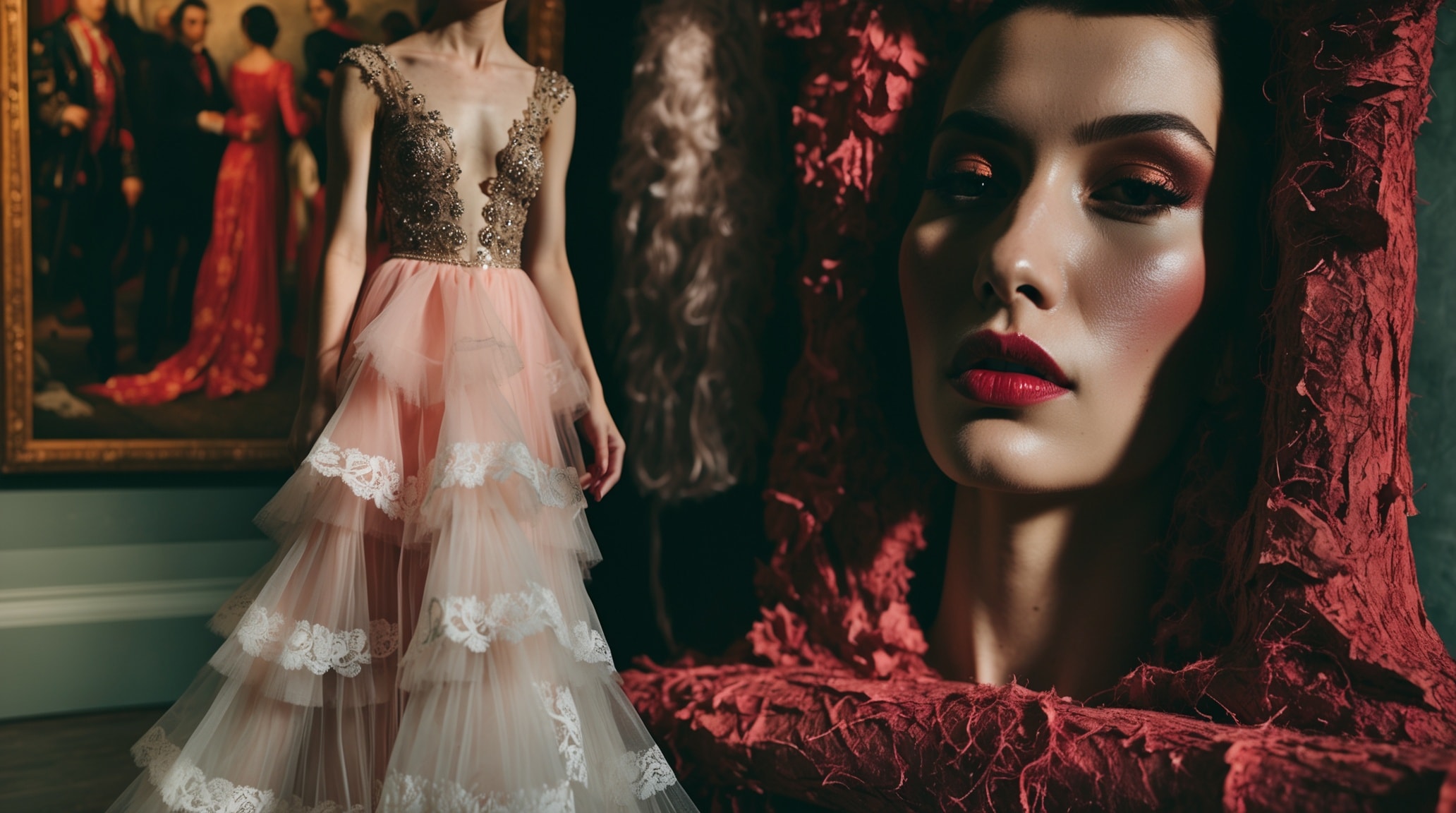
There is a psychological principle at work here that transcends aesthetics. Humans are hardwired to recognize craftsmanship. We can sense, almost instantaneously, whether something has been labored over or hastily assembled. We can feel the difference between a garment made by a master and one made by a machine. This recognition triggers something primal in us: respect, desire, a sense that we are in the presence of genuine skill.
Luxury collectors have always understood this. When you purchase a Hermès handbag, you are not merely purchasing leather and stitching. You are purchasing the accumulated knowledge of artisans who have spent decades perfecting their craft. You are purchasing the visible evidence of intention. The same principle applies to contemporary textural fine art. A painting constructed with thick impasto, with visible brushwork, with surfaces that demand to be seen in person and experienced in three dimensions, is communicating something essential about the artist's relationship to their materials and their subject matter.
"There's something magical about watching collectors run their fingers across a textured surface, even when they know they shouldn't touch. That impulse to reach out, to make contact with the work, tells me everything about whether the piece is working. The surface has to speak so clearly that it creates an almost irresistible desire to engage with it tactilely. That's the same impulse that makes someone reach out to touch a bolt of couture fabric."
This recognition of craftsmanship in textured surfaces creates a form of visual literacy that extends across disciplines. A collector who has spent years acquiring haute couture develops an eye for quality, for intention, for the subtle markers of mastery. That same eye, when turned toward contemporary fine art, will immediately recognize and respond to textural sophistication. The color harmonies that make a Chanel jacket timeless are the same color harmonies that make a contemporary abstract painting endure. The way light plays across a hand-woven textile is the same way light plays across an impasto surface. The disciplines speak the same language.
The Color Conversation Between Fashion and Fine Art
If texture is the grammar of luxury, then color is the poetry. And nowhere is the convergence between haute couture and contemporary textural art more apparent than in the realm of color theory and application.
The most sophisticated fashion designers are, fundamentally, colorists. They understand color relationships at a level that borders on scientific. A master couturier can place two colors side by side that should theoretically clash, but through understanding saturation, value, and undertone, they create a harmony that feels inevitable. Think of the way a great designer might pair a dusty rose with a teal green, or a warm terracotta with a cool lavender. The combination shouldn't work, and yet it does, because it has been constructed by someone who understands color at a profound level.
Contemporary textural artists working at the highest level operate with the same sophistication. The color palettes that collectors consistently praise in contemporary fine art are those that demonstrate this same mastery of color relationships. Not the obvious combinations, but the unexpected harmonies that somehow feel perfectly balanced. This is not accidental. It is the result of deliberate study, experimentation, and an almost intuitive understanding of how colors interact when applied in layers, when viewed from different distances, when experienced in varying light conditions.
For collectors, this shared language of color creates a kind of visual shorthand. If you have trained your eye to recognize sophisticated color relationships in fashion, that training transfers directly to fine art appreciation. You will naturally gravitate toward contemporary works that demonstrate the same level of color mastery. You will understand, viscerally, why certain color combinations work and others fall flat. This is one of the key reasons why fashion collectors often become serious fine art collectors. The visual literacy they have developed in one discipline transfers seamlessly to the other.
Material Innovation Across Disciplines
One of the most fascinating developments in contemporary luxury over the past fifteen years has been the explosion of material innovation. Fashion designers have begun experimenting with unconventional materials in ways that would have been unthinkable a generation ago. Comme des Garçons has constructed garments from paper and plastic. Iris van Herpen has pioneered 3D-printed textiles. Designers are working with recycled materials, with bio-fabricated textiles, with surfaces that challenge our fundamental assumptions about what fabric can be.
Simultaneously, contemporary fine artists have been engaging in their own material revolutions. Artists are working with unconventional mediums, combining traditional paint with modern materials, creating surfaces that challenge and expand our understanding of what a painting can be. This parallel innovation suggests something crucial: both disciplines are responding to the same cultural moment, the same desire to push beyond convention, to create surfaces and experiences that feel genuinely new.
For collectors, this material innovation creates exciting opportunities. When you acquire a contemporary textural artwork, you are often acquiring not just a painting or sculpture, but an experiment in material possibility. You are participating in the ongoing conversation about what art can be, what surfaces can express, what materials can communicate. This is thrilling in a way that purely representational or flatly painted work cannot be. You are not just acquiring an object; you are acquiring a statement about the future of visual culture.
The Investment Case for Textural Contemporary Art
From a purely financial perspective, contemporary textural art has proven to be a remarkably sound investment category. Unlike trendy, fashion-forward work that can feel dated within a few years, textural art possesses an inherent timelessness. The reason is simple: texture, like color harmony and compositional balance, is a fundamental principle of visual aesthetics. It does not go in and out of style because it is not style. It is substance.
Major collectors and institutions have recognized this. Over the past decade, museum acquisitions in the category of contemporary textural abstraction have increased significantly. Artsy's market data shows consistent appreciation in this category, with serious collectors viewing textural contemporary art as a stable, appreciating asset class. This is not because of speculative hype, but because the work demonstrates the fundamental qualities that give art enduring value: mastery of technique, sophistication of concept, and emotional resonance that deepens with time.
The collections of contemporary abstract works that have entered the market in recent years demonstrate this principle clearly. Works that combine technical mastery with sophisticated color relationships and compelling textural surfaces have consistently appreciated. Collectors recognize that they are acquiring work that will not feel dated in ten years, that will not be subject to the whims of fashion, but that will instead deepen and reward extended viewing.
Building a Textural Art Collection: Practical Considerations
For collectors new to acquiring contemporary textural art, several key principles should guide acquisition decisions. First, buy what you genuinely love. This may sound obvious, but it is worth emphasizing. Unlike purely financial investments, art lives in your home, in your space, in your daily life. You will spend thousands of hours looking at it. If you do not genuinely respond to a piece, no amount of investment potential will compensate for that lack of connection.
Second, understand the artist's process. Textural art, more than most categories, benefits from understanding how the work was created. What materials did the artist use? How were the surfaces built up? What was the conceptual intention behind the formal choices? This understanding deepens your appreciation of the work and helps you recognize the mastery embedded in the surface. Many serious collectors make a point of visiting artist studios, of watching demonstrations of technique, of engaging directly with the creative process.
Third, consider the scale and placement of works in your collection. Textural art is particularly sensitive to lighting conditions and viewing distance. A work that is stunning in a north-facing gallery space might feel completely different in your home. Consider how natural light moves through your space at different times of day. Consider the viewing distances from which you will typically see the work. Consider how the work will interact with other elements in your interior. These practical considerations are not superficial. They directly impact your experience of the art and your satisfaction with your acquisition.
Fourth, think about series and thematic coherence. Many collectors find that building a collection around a particular theme or aesthetic direction creates a more powerful overall impact than acquiring isolated masterpieces. This is particularly true with textural work, where color relationships and surface qualities can create visual conversations across multiple pieces. A collector might focus on a particular color palette, or a particular scale, or a particular conceptual thread. This creates a collection that feels intentional and coherent, rather than random.
Custom Commissions and Personalized Collecting
One of the most exciting opportunities available to serious collectors is the possibility of commissioning custom work. Rather than acquiring existing pieces, collectors can work directly with artists to create works tailored to their specific vision, space, and collection. This represents the ultimate expression of the collector's agency and the artist's responsiveness.
For collectors interested in textural contemporary art, commissioning offers particular advantages. A skilled artist can create work that responds to your specific color palette, your architectural space, your conceptual interests, and your collection goals. The artist can experiment with surface techniques, with scale, with materials, in ways that result in a work that is uniquely suited to your vision. This is not mass production or compromise. This is genuine collaboration between collector and artist.
The process typically begins with a consultation, where the collector and artist discuss the collector's vision, preferences, and requirements. The artist then develops preliminary concepts and proposals. There is typically an iterative process of refinement, where the collector provides feedback and the artist develops the work toward a final vision. The result is a work that feels deeply personal, that speaks directly to the collector's aesthetic sensibility, and that integrates seamlessly into the collector's collection and space.
Many collectors find that commissioning work deepens their relationship with contemporary art in fundamental ways. Rather than being passive consumers of existing work, they become active participants in the creative process. They develop a deeper understanding of artistic decision-making, material possibility, and technical mastery. And they end up with work that is genuinely unique, that could not exist without their vision and input.
Frequently Asked Questions
What exactly is textural fine art, and how is it different from other contemporary art?
Textural fine art emphasizes the physical, three-dimensional surface of the work. Rather than creating the illusion of depth through perspective or color theory, textural art creates actual depth through built-up materials, visible brushwork, or other surface treatments. The texture itself is the primary content of the work, not merely a formal element. This distinguishes it from representational or purely conceptual work, where surface texture might be secondary to subject matter or idea.
Is textural art a good investment?
Contemporary textural art has demonstrated consistent appreciation over the past fifteen years. Because texture is a fundamental principle of visual aesthetics rather than a stylistic trend, textural work tends to age well and maintain relevance. However, as with all art investment, the key factors are the quality of the work, the reputation and trajectory of the artist, and the authenticity of your personal connection to the piece. Buy work you genuinely love, and the investment value typically follows.
How do I know if a textural artwork is authentic and of high quality?
Several indicators suggest quality in textural contemporary art. First, examine the craftsmanship of the surface. Is the work constructed with intention and precision, or does it feel haphazard? Second, consider the color relationships. Do the colors feel harmonious and sophisticated, or do they feel arbitrary? Third, view the work in person if possible. Textural art absolutely requires in-person viewing to be properly appreciated. Photographs cannot convey the dimensional qualities that make the work compelling. Fourth, research the artist's background, training, and exhibition history. Serious artists typically have documented trajectories of growth and recognition.
What size textural artwork should I acquire?
Scale is a deeply personal decision that depends on your space, your viewing distance, and your aesthetic preferences. However, textural art generally rewards scale. Larger works allow viewers to see the subtlety and complexity of the surface more fully. A work that is six feet wide creates a completely different experience than the same composition at two feet wide. If you have the space and budget, consider larger-scale works. They tend to create more powerful impact and reward extended viewing.
How should I display textural artwork to best show off its qualities?
Lighting is absolutely critical for textural art. The work should be illuminated in a way that creates shadow and highlights across the surface, revealing the dimensional qualities. Avoid flat, overhead lighting. Instead, consider directional lighting that rakes across the surface, creating dramatic chiaroscuro effects. Also consider how natural light moves through your space. A work that is stunning in morning light might feel completely different in afternoon light. Spend time observing your space at different times of day before finalizing placement and lighting decisions.
Can I commission custom textural artwork, and what does that process entail?
Yes, many serious contemporary artists accept commissions. The process typically begins with an initial consultation where you discuss your vision, preferences, color palette, and spatial requirements. The artist then develops preliminary concepts, which you review and provide feedback on. There is typically an iterative refinement process, followed by the creation of the final work. The timeline typically ranges from two to six months, depending on the scale and complexity of the work. Commission pricing varies widely depending on the artist's reputation, the scale of the work, and the complexity of the project.
How do I care for and maintain textural artwork?
Textural artwork requires careful handling and maintenance. Avoid touching the surface, as oils from skin can damage the work over time. Dust gently with a soft brush if necessary, but avoid aggressive cleaning. Protect the work from direct sunlight, which can cause fading over time. Maintain stable temperature and humidity levels in your space, as fluctuations can cause the materials to expand and contract, potentially damaging the work. If the work is valuable or you are uncertain about care, consult with a professional conservator.
What is the "Guscio" technique, and why is it significant?
The Guscio technique is a proprietary method of building up layered surfaces to create dimensional, tactile depth. Rather than applying paint in flat layers, the Guscio approach creates complex interplays of texture, color, and light through carefully controlled material application. The result is work that reveals new details and color relationships as viewing distance and lighting conditions change. This technique represents a contemporary evolution of impasto and other textural painting traditions, adapted for contemporary aesthetic sensibilities and material possibilities.
How do I start building a textural art collection if I'm new to collecting?
Begin by educating yourself about contemporary textural art. Visit galleries, museums, and artist studios. Look at work in person, not just in photographs. Read about artists and their processes. Start by acquiring smaller works or prints if your budget is limited. Focus on work that you genuinely love rather than work you think you should like. Build relationships with galleries and artists. Over time, your eye will develop and your collection will become more sophisticated and coherent. Remember that collecting is a journey, not a destination.
What is the difference between textural fine art and decorative art?
The distinction between fine art and decorative art is historically complex and somewhat contested in contemporary discourse. However, a useful distinction is that fine art is typically created primarily for aesthetic and conceptual engagement, while decorative art is created primarily to enhance an interior space or functional object. Textural fine art can certainly enhance an interior, but its primary purpose is aesthetic and intellectual engagement. The work is created first and foremost to be experienced as art, not merely as decoration. That said, the best textural fine art also functions beautifully in interior spaces, creating visual interest and sophistication.
Experience Textural Art in Your Collection
The convergence between haute couture and contemporary textural fine art represents one of the most exciting developments in luxury collecting today. For collectors who have trained their eye through years of acquiring fine fashion, the transition to serious fine art collecting feels natural and intuitive. You already understand color harmony. You already recognize craftsmanship. You already respond to textural richness. You are, in many ways, already a collector of contemporary art. You simply need to extend your sensibility to a new medium.
The opportunity before you is to build a collection that speaks to your deepest aesthetic values, that surrounds you with work of genuine mastery and sophistication, and that will reward you with deepening appreciation and enjoyment for decades to come. Whether you are acquiring existing works or commissioning custom pieces, the key is to engage seriously with the art, to educate yourself about the artists and their processes, and to allow your eye to develop naturally over time.
Explore the abstract collections available through Gabrielle Benot's studio to see how contemporary textural art can function in your collection. Consider scheduling a private consultation to discuss your aesthetic vision and explore custom commission possibilities. Visit gabriellebenot.com to learn more about the artist's process, materials, and philosophy. The world of textural contemporary art awaits, speaking the same language of luxury, intention, and mastery that has always animated your relationship with fine fashion.