What Makes a Giclee Worth Owning: A Connoisseur's Guide to Limited Edition Fine Art Prints and How to Choose the Right One for Your Interior

There is a moment every serious collector understands: standing before a work of art and feeling something shift. The colors pull at you. The surface demands your attention. You find yourself wondering whether you can live without it. That experience is not exclusive to seven-figure originals displayed at Art Basel or auctioned at Christie's. A museum-quality giclee, chosen with knowledge and intention, can deliver that same gravitational pull, at a fraction of the price, and with a permanence that rewards the investment for decades.
What a Giclee Actually Is (And What It Is Not)
The word "giclee" (pronounced zhee-KLAY) derives from the French verb gicler, meaning to spray or squirt, a reference to the inkjet process that defines the medium. But the term has been so widely misused that it now requires a careful eye to decode. A true fine art giclee is produced on archival-grade substrates, whether cotton rag paper, canvas, or metal, using pigment-based inks that are certified to resist fading for 100 years or more under standard display conditions. The resolution is extraordinary, often exceeding 1440 dpi, capturing nuances of color and tone that offset lithography simply cannot replicate.
What a giclee is not is a laser printout, a poster, or a mass-produced reproduction sold in bulk at a home furnishings chain. The distinction is not snobbery; it is material science. Pigment-based archival inks behave fundamentally differently from dye-based inks, which shift and fade within years of display. When collectors ask, "Are giclees worth buying?" the honest answer is: the right ones, absolutely. The wrong ones, emphatically not.
The Edition Number Is Everything
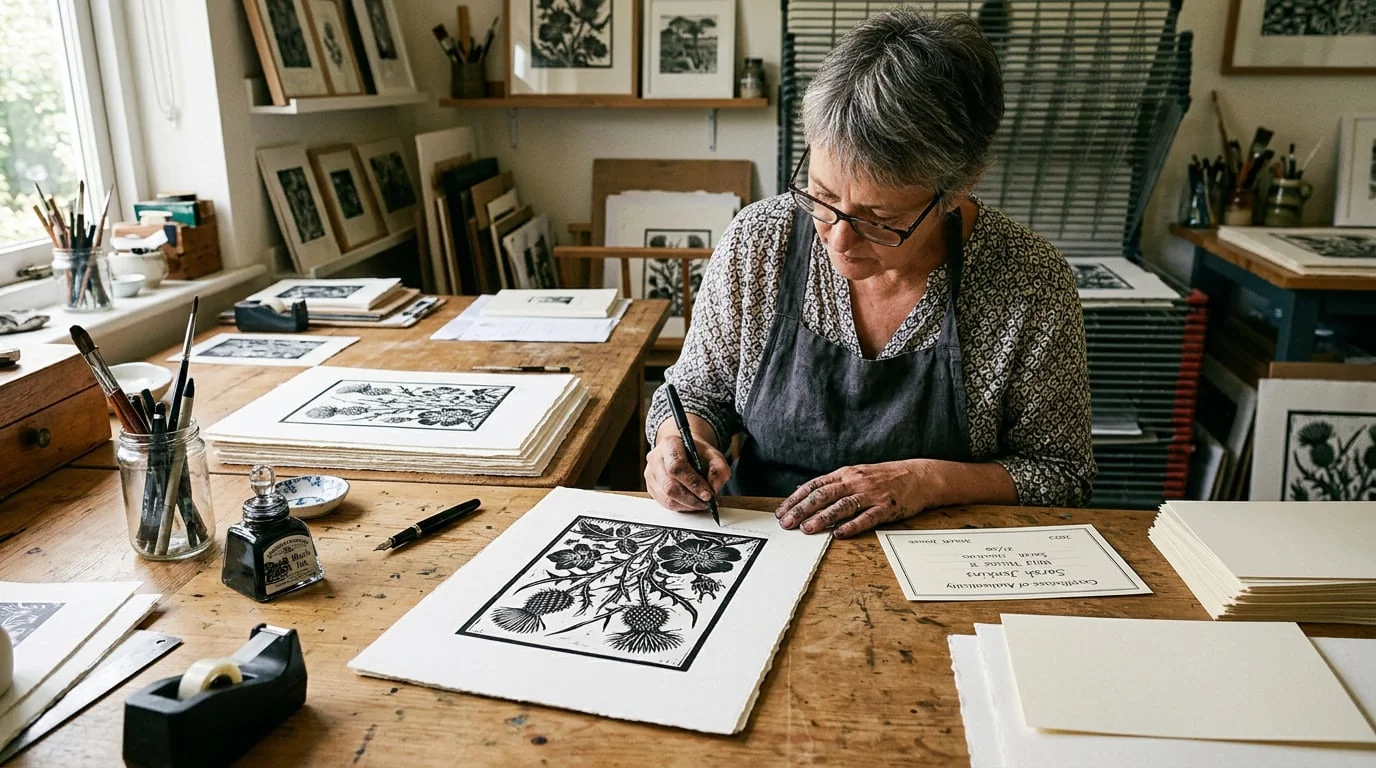
Limited edition is a phrase that carries real legal and ethical weight in the fine art world. A genuine limited edition print is produced in a defined, finite quantity, typically between 10 and 250 pieces, after which the file or plate is retired and no further prints are made. Each piece is individually numbered (e.g., 7/50) and hand-signed by the artist, creating a verifiable chain of authenticity. This scarcity is not a marketing device; it is the structural foundation of the print's value as a collectible asset.
Contrast this with "open edition" prints, which have no defined ceiling on production. While open editions can be beautiful decorative objects, they do not appreciate in value the way limited editions do. As an artist's reputation grows, early limited edition prints become increasingly sought after. Collectors who acquired early Jasper Johns or Robert Rauschenberg prints in modest editions now hold pieces worth multiples of their original price. The lesson is clear: edition size and artist trajectory are the two variables that matter most when evaluating a print as an investment.
"A limited edition giclee is not a compromise. In the hands of a master colorist, it is an original experience, one that carries the full emotional and chromatic authority of the work it represents."
Color Fidelity: The Hardest Thing to Get Right
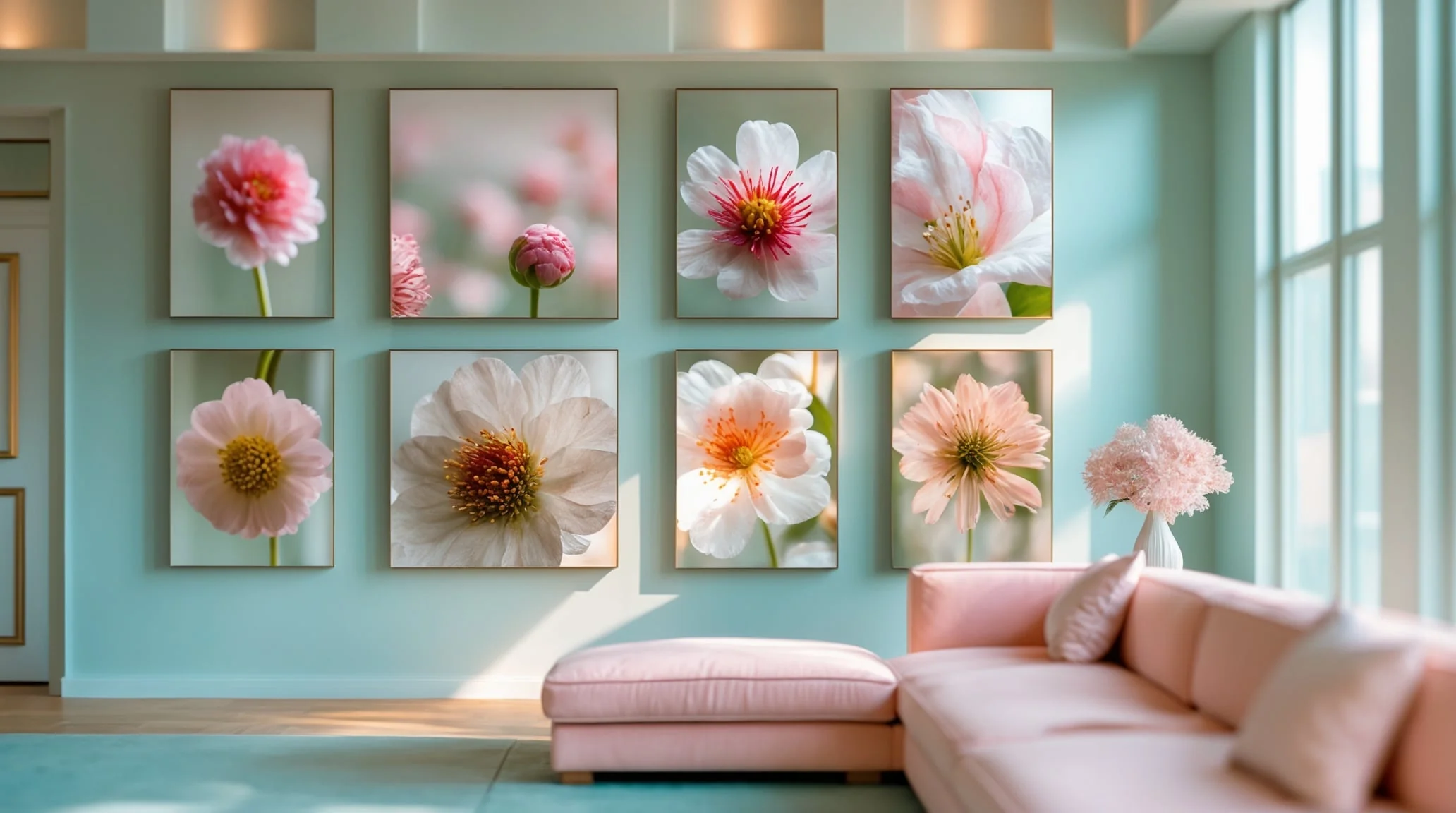
Among all the technical benchmarks of a fine art giclee, color fidelity is the most demanding and the most revealing. Color management in high-end giclee production involves ICC profiles, calibrated monitors, proofing cycles, and substrate-specific ink layering. A print that is even slightly off in its color calibration will feel flat, lifeless, and unconvincing next to the original. This is why the best fine art giclees are produced in close collaboration between the artist and a master printmaker, often requiring multiple proof rounds before a single edition print is approved.
This is precisely where works rooted in bold, complex color palettes become the most demanding and the most rewarding to reproduce. The chromatic richness that collectors consistently admire in Gabrielle Benot's abstract collection, those luminous, harmonious palettes that feel simultaneously unexpected and inevitable, requires an exceptional level of color precision to translate faithfully into a limited edition print. When it is achieved, the result is a piece that carries the full emotional authority of the original work.
Choosing the Right Size for Your Space
One of the most frequently searched questions among new collectors is: "What size art print should I buy for my wall?" The answer is almost always: larger than you think. Interior designers and art consultants at firms like Architectural Digest consistently advise that undersized art is the single most common mistake in residential and commercial interiors. A piece that commands a wall creates presence, anchors a room, and functions as true focal architecture. A piece that is too small simply disappears.
As a practical guide: for a sofa or console wall, the artwork should span roughly two-thirds to three-quarters of the furniture's width. For a dining room or entryway, a single large-format piece of 40 inches or wider reads with authority. For a bedroom, scale to the headboard. These are not rigid rules, but they reflect the visual logic that professional designers use instinctively. When in doubt, tape out the dimensions on the wall with painter's tape before committing. The scale that feels "too big" in your imagination almost always feels exactly right once it is hanging.
Substrate Matters: Paper, Canvas, or Metal
The surface on which a giclee is printed is as consequential as the image itself. Cotton rag paper delivers a classic, museum-quality finish with exceptional detail and a matte or satin surface that reads beautifully under gallery lighting. Canvas giclees, particularly when hand-embellished by the artist, bridge the gap between print and original, offering a tactile warmth that suits traditional and transitional interiors. Metal prints, produced on aluminum or dibond substrates, deliver a luminous, almost backlit quality that is unmatched for contemporary and minimalist spaces. The colors appear to glow from within, and the surface requires no glass, no glare, and virtually no maintenance.
The Gabrielle Benot fine art shop offers limited edition giclees in formats that honor the original works' chromatic intensity and compositional power. For collectors who have admired the large-scale originals but are seeking an accessible entry point into the collection, these editions represent a rare opportunity: museum-grade quality, certified archival standards, and the kind of color presence that transforms a room from beautiful to extraordinary.
The finest giclee prints are not consolation prizes for those who missed the original. They are deliberate, crafted objects with their own authority and their own future. Choose one with knowledge, hang it with intention, and it will reward you every single day.